 Fordel Studios
Construction Project Management Agent
Surface schedule risk and resource conflicts before they become delays or claims.
The problem
being solved
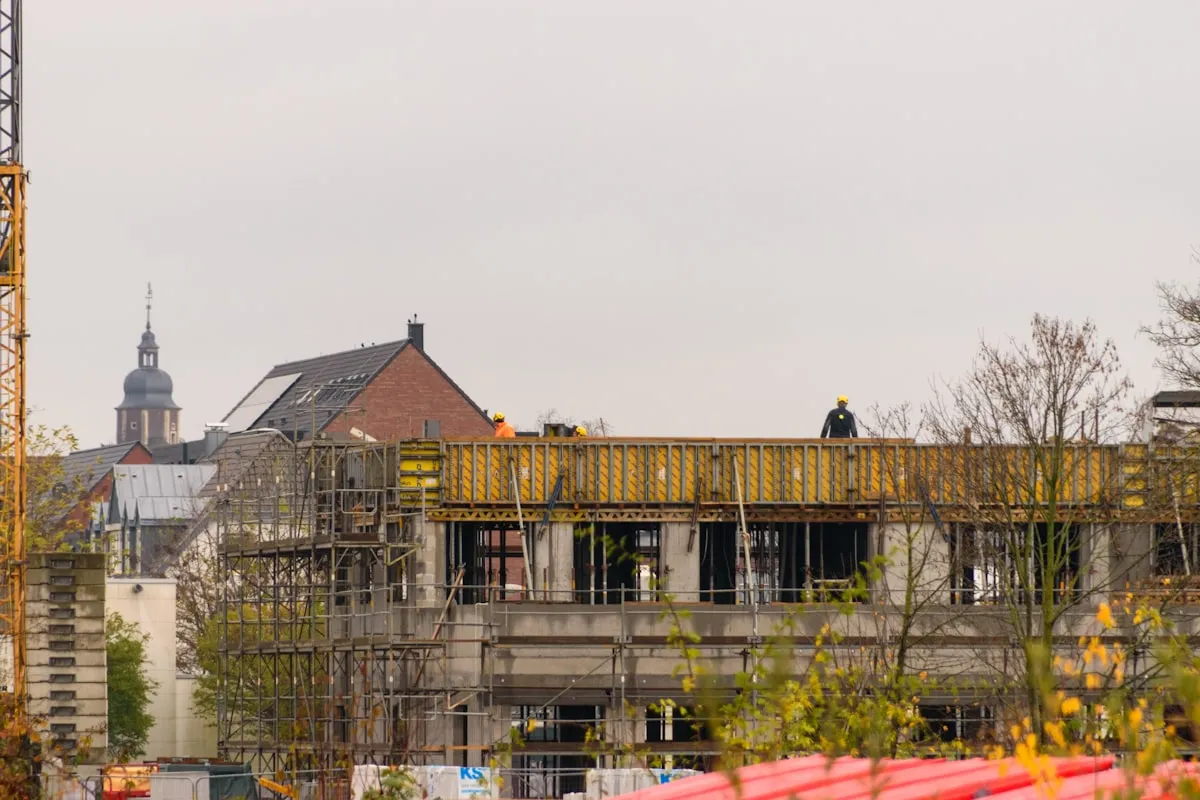
Construction project management is fundamentally an information problem. A general contractor managing five concurrent projects has project managers, superintendents, subcontractors, owners, and inspectors generating dozens of documents, RFIs, submittals, change orders, and schedule updates daily across every project. The information exists; the challenge is synthesizing it into project status that enables proactive decisions.
McKinsey's Global Infrastructure Initiative research found that large construction projects average 80% overrun on schedule and 20% overrun on budget. The root cause is not a lack of information — it is the lag between when information enters the project system (a delayed submittal, a pending RFI, a weather event) and when a project manager synthesizes that information into a risk assessment.
Procore's platform data shows that projects using integrated document management have 13% fewer change orders and 8% better schedule performance. OpenSpace's visual progress documentation enables remote verification of physical progress against the schedule. The missing layer is synthesis: an agent that monitors all project data streams and surfaces risk before it becomes delay.
How this
agent works
The Construction Project Management Agent monitors all configured project data sources — schedule, RFI log, submittal log, daily reports, change order log, and site progress imagery — and identifies developing risks before they become delays.
When a critical-path submittal is approaching its required date without approval, the agent flags it and identifies which activity will be delayed and by how much if the submittal slips. When an RFI has been open for longer than the contractual response period, the agent identifies the downstream schedule impact and notifies the relevant parties. When weather data shows conditions that will prevent site work for the next three days, the agent recalculates projected completion and flags any schedule-critical impacts.
Project managers receive a daily risk summary: developing issues, their projected schedule impact, and recommended actions. The agent eliminates the daily data gathering that currently consumes 1–2 hours of project manager time and replaces it with a curated risk-focused summary.
A Go-based integration layer pulls live schedule, RFI, submittal, change order, and daily report data from Procore or Autodesk Construction Cloud via their REST APIs, storing normalized records in PostgreSQL with Redis for real-time state. A Python scheduling engine runs continuous critical path calculations against current field data and weather forecasts, flagging activities at risk before they impact the project end date. LangGraph orchestrates the multi-step risk assessment workflow — Claude evaluates flagged items, generates plain-language risk summaries, and routes alerts to the right parties. Computer vision compares site capture imagery from OpenSpace or Matterport against scheduled work areas to detect physical progress gaps.
A general contractor managing 8 concurrent commercial construction projects employs 6 project managers. Each PM currently spends 1.5–2.5 hours per day gathering project status: checking Procore logs, reviewing subcontractor submittals, tracking RFI responses, and updating schedules. Most of the risk identification is reactive — the PM learns about a problem when a subcontractor calls, not from proactive monitoring.
After deploying the project management agent, project monitoring runs continuously. PMs receive daily risk summaries with flagged items and projected schedule impacts. The 1.5–2.5 hours of daily data gathering drops to 20–30 minutes of reviewing the agent's summary and acting on flagged items.
These projections are informed by McKinsey's construction technology research, Procore's platform performance data, and industry benchmarks from the Construction Management Association of America.
| Metric | Before | After |
|---|---|---|
| Daily project status visibility | Assembled manually by PM from multiple systems (1.5–2.5 hrs) | Daily automated risk summary with flagged items and projected impacts (20–30 min review) |
| Overdue submittal detection | Noticed when PM reviews log (periodic, reactive) | Flagged automatically when approaching required date, before it affects schedule |
| Schedule impact of developing issues | Calculated manually by PM after issue identified | Calculated automatically and included in risk alert when issue first detected |
- 01
Continuous Schedule Risk Monitoring
Maintains a live critical path model updated with RFI status, submittal approvals, procurement logs, and NOAA weather forecasts. Identifies activities at risk of delay and calculates projected float consumption. Alerts fire before the critical path is impacted — not after the superintendent reports a problem.
- 02
RFI & Submittal Tracking
Monitors every open RFI and submittal against its contractual response deadline and its position on the critical path. Sends automatic reminders to responsible parties — architect, engineer, owner — before deadlines pass. Tracks response time compliance and logs it for potential delay claim documentation.
- 03
Daily Report Intelligence
Parses uploaded daily field reports to extract crew counts, work completed, weather conditions, material deliveries, and issues logged. Compares reported progress against the scheduled baseline and flags discrepancies. Surfaces patterns across reports — recurring crew shortages, repeated weather delays — that indicate systemic risk.
- 04
Change Order Impact Analysis
When a potential change order comes in, the agent maps its scope and estimated duration against the current schedule to calculate float impact. Identifies whether the affected work area has concurrent open changes or active RFIs that compound the risk. Flags scope overlap with existing contract work that could create a differing site conditions exposure.
- 05
Visual Progress Documentation
Integrates with OpenSpace, Matterport, or direct photo uploads to compare site capture imagery against scheduled work areas using computer vision. Generates superintendent verification requests for areas where visual evidence and schedule data diverge. Produces a timestamped audit trail of physical progress documentation tied to the project schedule.
Build this agent
for your workflow.
We custom-build each agent to fit your data, your rules, and your existing systems.
Free 30-min scoping call