Fordel Studios
Five stories from this week that cleared my noise filter. Not the viral takes — the ones that change how you should be working, building, or thinking about AI right now.
Is Google About to Make the IDE Wars Irrelevant
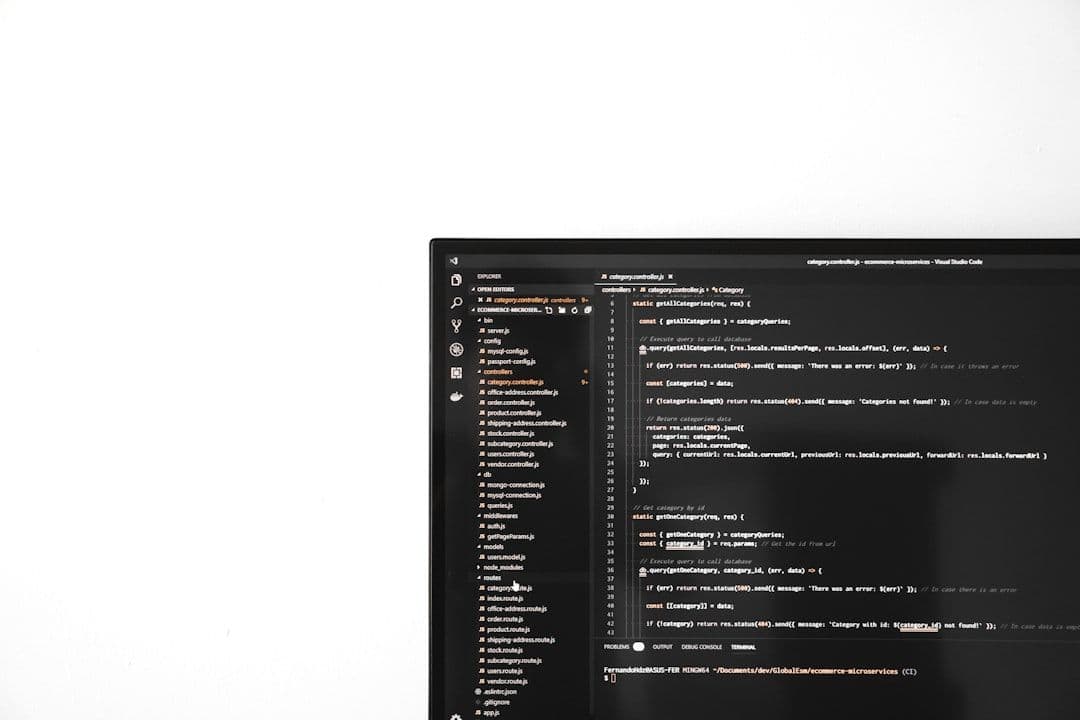
Google launched a full-stack vibe coding experience directly inside AI Studio — Gemini handling code generation, execution, and deployment in a single browser-native flow. In the same week they shipped Gemini 3.1 Flash Live, a real-time multimodal model aimed at conversational agents with sub-second response latency.
The full-stack IDE play is catch-up to Cursor and Claude Code, but doing it in the browser without any local install is a different strategic bet entirely. Flash Live is the more interesting piece — sub-second latency for voice-first agents is not an incremental improvement, it is a different UX category. Chat interfaces start feeling slow once you have used something that responds before you finish a sentence. Google is building toward that, and they have the infrastructure to deliver it at scale in a way nobody else does.
“The IDE wars stop mattering the moment browser-native coding closes the capability gap. Google is betting it gets there before your dev team finishes evaluating a new tool.”
Why it matters: If browser-native coding reaches parity, Anthropic and Cursor's moat collapses to brand loyalty. The real competition in agentic coding is moving from tooling to model quality — and that is Google's home turf.
Was Rewriting JSONata With AI Actually Worth It
A team posted on Hacker News this week: they rewrote JSONata — a JSON query and transformation language deeply embedded in enterprise integration tooling like IBM App Connect Enterprise — with AI assistance in a single day. The result: $500,000 per year in licensing costs eliminated. One day of work, one year's worth of immediate ROI.
This is the AI ROI story most teams are not telling. Not 'AI wrote my whole app,' but 'AI ported a well-understood, bounded library that we understood completely but could not justify rewriting manually.' The $500k number is believable — commercial licensing at enterprise integration scale gets genuinely absurd. When the library has a clear spec, existing tests, known inputs and outputs, and real licensing pain, it is the perfect AI rewrite candidate. Most engineering teams have three to five of these sitting in their dependency tree right now.
Why it matters: The ROI on AI-assisted library rewrites is often immediate and measurable in a way that most AI productivity claims are not. If you have a $50k+ annual licensing dependency on any library with a clear spec, you should already be doing this math.
Is JPMorgan's AI Mandate Good or Bad for Engineers
Business Insider reported this week that JPMorgan has given its software developers new objectives tied directly to AI tool adoption. Use AI or fall behind in performance reviews. The bank has been rolling out LLM Suite internally — this is the moment they make it a KPI, not just a suggestion.
JPMorgan employs over 50,000 technologists. When an institution that size ties compensation to AI usage, every enterprise AI vendor just got a new proof point to sell against. The concern is real though: mandating tool adoption does not mandate quality outcomes. You can hit your AI usage KPI by running every commit message through Copilot. Measuring what actually changes in delivery speed or defect rates is harder and slower, and most banks won't wait for that data before reporting success upward.
Why it matters: The 'should we adopt AI tools' conversation is over at tier-1 financial institutions. The next conversation — which tools, what metrics, what compliance guardrails — is where engineering leaders should be spending cycles. If you are consulting into finance, this is your door.
Will Software Engineers Actually Survive Agentic AI
The Financial Times ran a piece this week asking whether software engineering survives the agentic AI wave — pulling together the Anthropic CEO's comments about AI replacing most developers alongside real enterprise adoption signals. Mainstream financial press is now writing the story we have been watching build for two years.
The FT framing is the wrong question. The right question is which quartile of software engineers are we talking about. The top quartile just became significantly more powerful — agentic tools multiply output for engineers who already know exactly what they are building. The bottom quartile is already being displaced, not by AI directly, but by non-engineers who now ship working software with Cursor and Claude Code. The middle quartile — solid engineers who execute well but do not lead — is the actual anxiety zone. Most exposed, least prepared.
“It is not about survival. It is about stratification. The distance between your best and worst engineers just increased by an order of magnitude.”
Why it matters: How you answer this question determines whether you invest in engineering depth or headcount right now. Those are opposite bets with opposite consequences if you are wrong.
Can LLMs Actually Unmask Your Anonymous Users
Research surfaced this week on Lobsters demonstrating that LLMs can deanonymize supposedly anonymous online content at scale — matching anonymous posts to real identities using only writing patterns, vocabulary, and contextual signals. No metadata required. Just text, read at scale.
Every anonymization pipeline built before 2024 was designed to strip metadata: names, emails, IP addresses, timestamps. Nobody stress-tested them against a model that reads like a forensic linguist operating at infinite scale and zero marginal cost. Your GDPR-compliant anonymized training data, your user research transcripts, your anonymized support tickets piped into an analytics dashboard — these may not be anonymous in any legally meaningful sense anymore. The attack requires no adversarial intent, just API access and a question.
Why it matters: This is the quietest legal liability created by AI in 2026. Deanonymization is now a commodity operation, and the legal frameworks used to define adequate anonymization have not caught up.
That's the week. See you Monday.